

Why choose Stainless Steel by Paige Stainless?
Australian made Paige Stainless steel drainage channels offer industry-leading performance, exceptional safety, greater environmental responsibility, and the best whole-of-life value—thanks to unmatched durability and minimal maintenance. Stainless steel has up to 4 times the lifespan of plastic alternatives and is 100% recyclable, while providing best-in-class slip resistance and superior load capacity.
A growing number of architects, developers and trades across Australia are switching from Plastic (HDPE / Polypropylene) to Stainless Steel by Paige Stainless for their drain channels!
The Australian construction sector is increasingly opting for stainless steel drainage solutions from Paige Stainless, driven by demands for higher slip resistance, greater load ratings, aesthetic flexibility, and sustainability. High-profile projects in civic spaces, hospitality venues, transport hubs, and demanding coastal environments showcase the superior fit and finish of stainless steel over plastic.
What makes Stainless Steel drainage channels manufactured in Australia by Paige stainless better?
- Precision fabrication ensures fast, accurate installation and a reliable, watertight fit every time.
- High slip resistance options and pedestrian-safe profiles—such as heel guard grating for ultimate safety.
- Remains strong, stable, and long-lasting, even under heavy and continuous traffic.
- Delivers low-maintenance operation with excellent corrosion resistance, even in harsh, wet, or salty conditions.
- Fully customisable—accommodates curves, varying widths, or complex angles for seamless architectural integration.
- Industry-leading sustainability: Paige Stainless channels are Greentag certified, made locally, and 100% recyclable.
Head-to-head comparison: key factors
| Criteria | Stainless Steel | Plastic (HDPE / Polypropylene) |
|---|---|---|
| Weight and handling | Heavier, robust; best handled with care; manageable by installers | Lightweight and easy to carry by hand |
| Installation | Fast, precise with custom options; accurate tolerances; less site cutting needed | Simple, but often requires additional bracing; limited to straight runs |
| Cutting/processing safety | Generates minimal, manageable dust; doesn’t splinter or crack; standard PPE applies | Can create hazardous fine dust and microplastics when cut; PPE crucial |
| Durability and longevity | Up to 50+ years; resists wear, impact, and UV | 10-20 years; may become brittle, crack, or deform over time |
| Corrosion resistance | Outstanding—even in coastal/marine environments | Susceptible to some chemicals, UV degradation, and stress cracking |
| Load capacity and strength | Supports high traffic and heavy loads (AS 3996) | Limited; not suited for very heavy loads |
| Cost (initial) | Higher, offset by longer lifespan and lower maintenance | Low upfront, but higher replacements and repairs needed |
| Cost (whole-of-life) | Very low; minimal interventions, longer intervals | High; short replacement cycles, more frequent repairs |
| Maintenance | Minimal—easy to clean, corrosion-resistant | Regular cleaning needed; may require total unit replacement |
| Environmental impact | 100% recyclable, low embodied energy, Greentag certified | Derived from non-renewable fossil fuels, not easily recyclable |
| Heat and fire resistance | Non-combustible, stable at high temperatures | Can melt, warp, or combust under heat |
| Chemical resistance | Highly resistant to most chemicals | Resistant to some, but can be attacked by solvents/acids |
| Safety (slip, conductivity) | Engineered slip resistance, heel-guard available, non-sparking | Poor slip resistance; can be slippery, prone to static build-up |
| Aesthetics and versatility | Superior finishes, matches architectural details, customisable shapes | Limited colour/finish, cannot form tight radii or complex angles |
Stainless Steel Drainage Channels by Paige Stainless
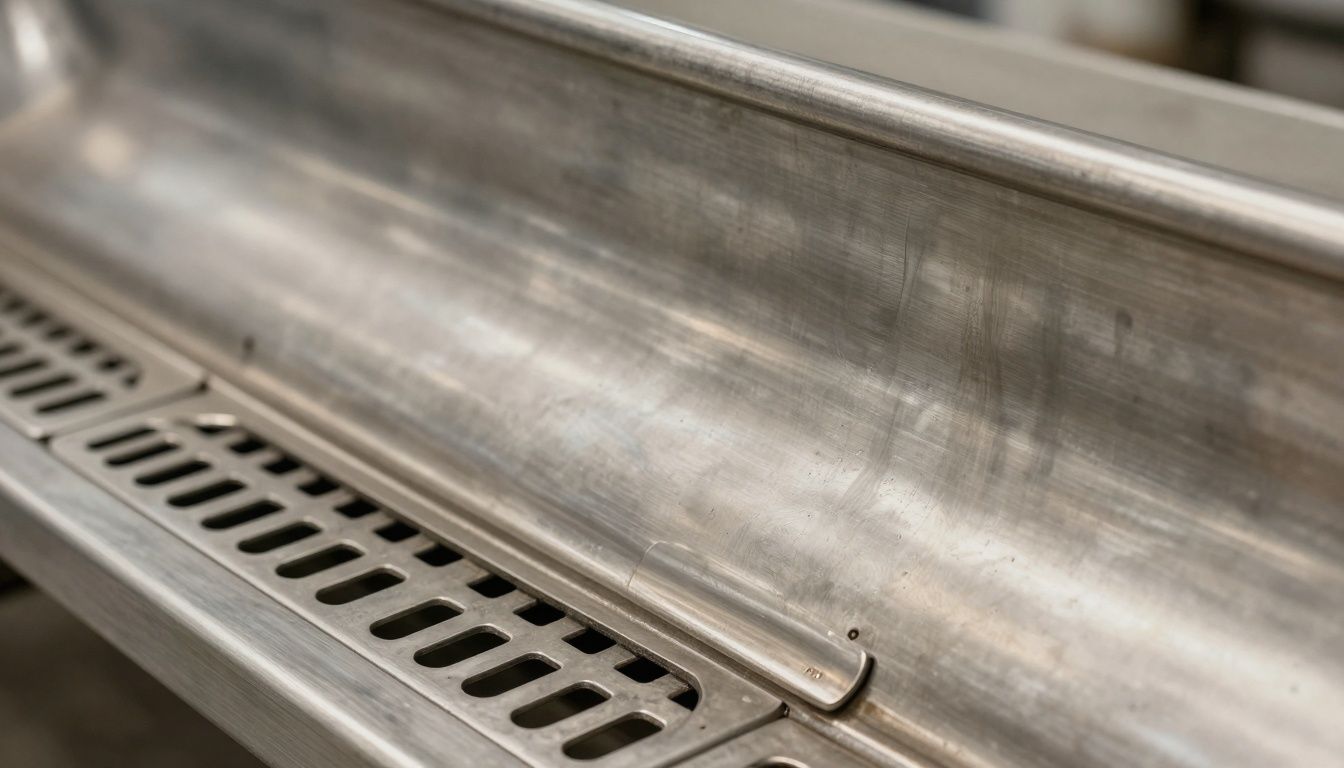
- What they do: Efficiently manage surface water and debris in high-traffic and demanding environments.
- How they work: Channel water quickly via precision falls and robust grating, resisting blockages and standing water.
- Where they are made: Manufactured in Australia, ensuring strict quality and compliance standards.
- How they are made: Laser-cut and precision-welded stainless steel, custom-made for project needs.
- Environmental impact: 100% recyclable, low-CO2 production, Greentag certification.
- Installation process: Fast, accurate fit; can be supplied pre-assembled to suit site requirements; easy integration with existing surfaces.
- Features: Slip resistance options; heel guard grates; custom curves, lengths, and widths; removable lids for easy cleaning; anti-vandal and lockable grates available.
- Performance: Exceptional—supports Class A to Class D load ratings to AS 3996; resists corrosion, impact, and vandalism.
- Lifespan: 30-50+ years when properly maintained.
- Pricing: Higher initial investment, but unmatched value across project lifetime due to minimal replacements and maintenance.
Plastic (HDPE / Polypropylene) Drainage Channels
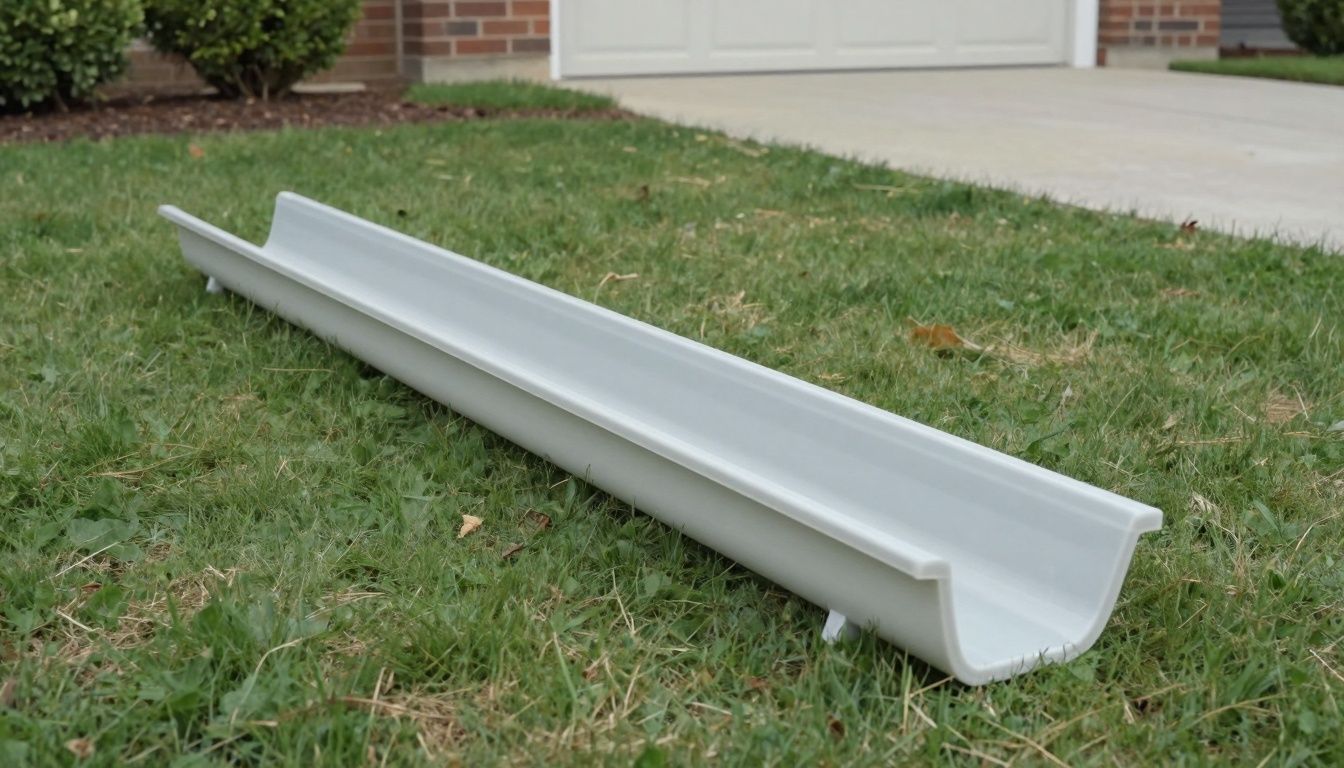
- What they do: Provide drainage for light-duty and residential applications.
- How they work: Use modular channels with snap-fit or overlap joints to move water to drains.
- Where they are made: Commonly mass-produced overseas and imported; low manufacturing control.
- How they are made: Injection moulded from oil-derived polymers.
- Environmental impact: High energy inputs, non-renewable raw materials, difficult to recycle.
- Installation process: Lightweight for fast handling but often needs increased bedding/support to prevent distortion; limited flexibility in layout.
- Features: Simple; limited load/grate designs; basic grating for shoes and debris.
- Performance: Suits only low-traffic areas; can deform under load, fade in sun, or crack from impact.
- Lifespan: Typically 10-20 years before replacement due to UV or mechanical damage.
- Pricing: Lower initial cost; higher frequency of replacement and repairs increases true cost over time.
FAQs: Stainless Steel vs Plastic (HDPE / Polypropylene)
- Which material is better for most applications?
For any project requiring durability, aesthetics, high-load capacity, and safety—Stainless Steel by Paige Stainless far outperforms plastic, particularly in commercial, civic, and architectural works. - Can Stainless Steel by Paige Stainless meet Class D load ratings under AS 3996?
Yes. Paige Stainless designs and tests drainage channels to meet or exceed all AS 3996 load classes, including Class D for roads and heavy civil use—full test data and compliance certifications supplied on request. - How does slip resistance compare in wet areas?
Stainless Steel grates can be supplied with R10-R12 slip ratings, engineered heel guard patterns, and non-slip profiles for safe pedestrian areas—far superior to standard plastic options. - What are the maintenance requirements over a 10–20 year lifecycle?
Stainless Steel: periodic cleaning with water and mild detergent; grates rarely need replacing. Plastic: more frequent cleaning to prevent blockages, may require replacement of faded, warped, or broken sections every 10–20 years. - Is Stainless Steel suitable for custom design like curves and architectural details?
Absolutely. Paige Stainless channels are custom-fabricated in Australia, capable of tight curves, intersecting angles, and complex configurations to match unique project needs with precise tolerances.
Ready to specify Stainless Steel?
For technical guidance, project pricing or custom fabrication support—including curved drainage channels and engineered systems—contact the Paige Stainless team to discuss compliant, Australian-made drainage solutions that consistently outperform the alternatives.
- Technical data and certifications available on request (AS 3996 load classes, slip resistance to AS 4586, accessibility to AS 1428.2, and sustainability credentials)