

Why choose Stainless Steel by Paige Stainless?
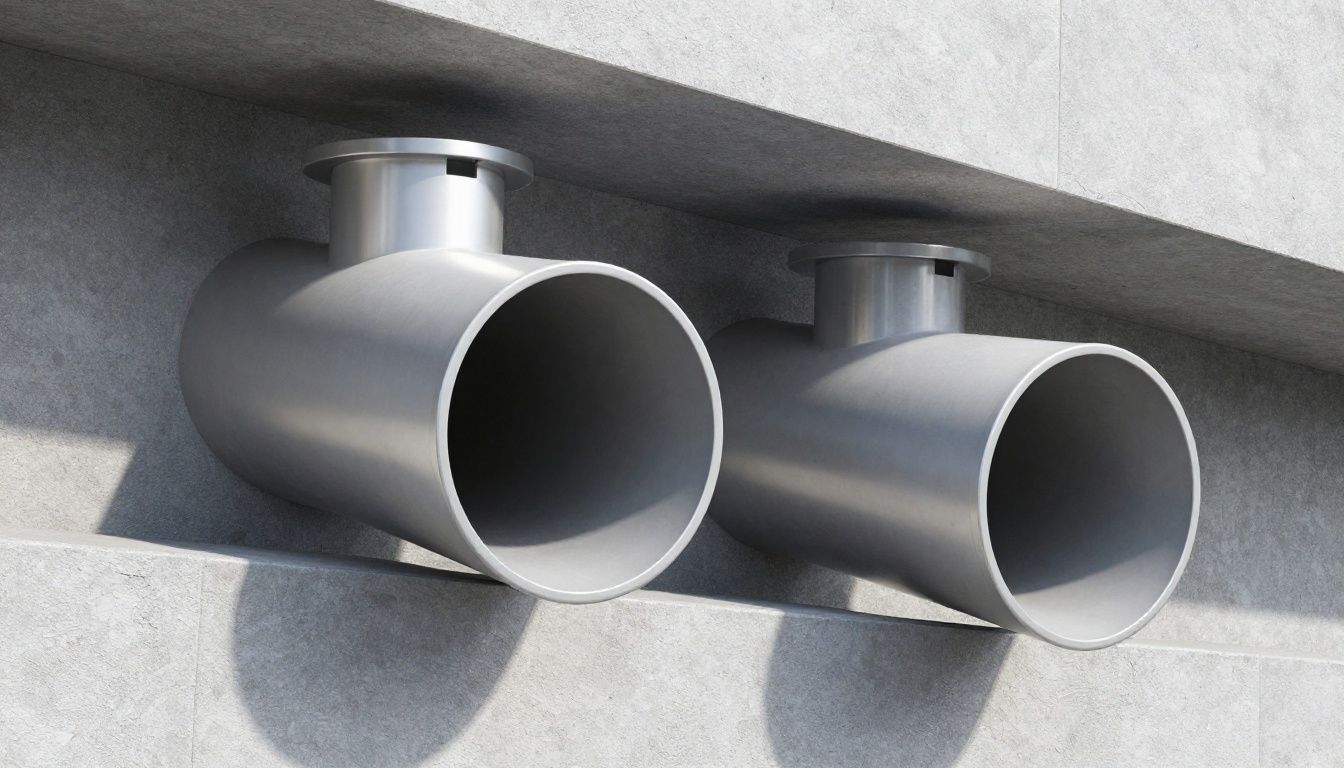
Paige Stainless’ Australian made stainless steel drainage channels set the benchmark for durability, safety, and sustainability, outperforming GRP systems with up to 30+ years expected lifespan, minimal maintenance, and superior lifecycle value. With over 90% recyclability and engineered slip resistance, stainless steel offers whole-of-life cost efficiency unmatched by GRP.
A growing number of architects, developers and trades across Australia are switching from GRP to Stainless Steel by Paige Stainless for their drain channels!
Sectors ranging from major civic streetscapes to marine infrastructure and hospitality venues now specify Paige Stainless, driven by demands for higher slip resistance, custom curved profiles, superior load ratings, precision fit and proven sustainability. Notable projects, including high-rise and airport developments, highlight the shift toward Australian-made stainless steel.
What makes stainless steel drainage channels manufactured in Australia by Paige stainless better?
- Precision Australian fabrication ensures fast, accurate installation and an exact reliable fit on every project.
- Engineered slip resistance and pedestrian-safe profiles, such as certified heel guard grating, exceed industry standards.
- Exceptionally strong, stable, and resilient under heavy, high-traffic and vehicular loads—built for decades of service.
- Highly corrosion-resistant in coastal, marine, and high-moisture environments, minimising maintenance.
- Customisable to any curve, angle, width or finish—ideal for bespoke architectural features or complex projects.
- Paige Stainless is GreenTag certified, with materials and manufacturing prioritising recyclability and reduced environmental impact.
Head-to-head comparison: key factors
| Criteria | Stainless Steel (Paige Stainless) | Glass Reinforced Polyester/Polymer (GRP) |
|---|---|---|
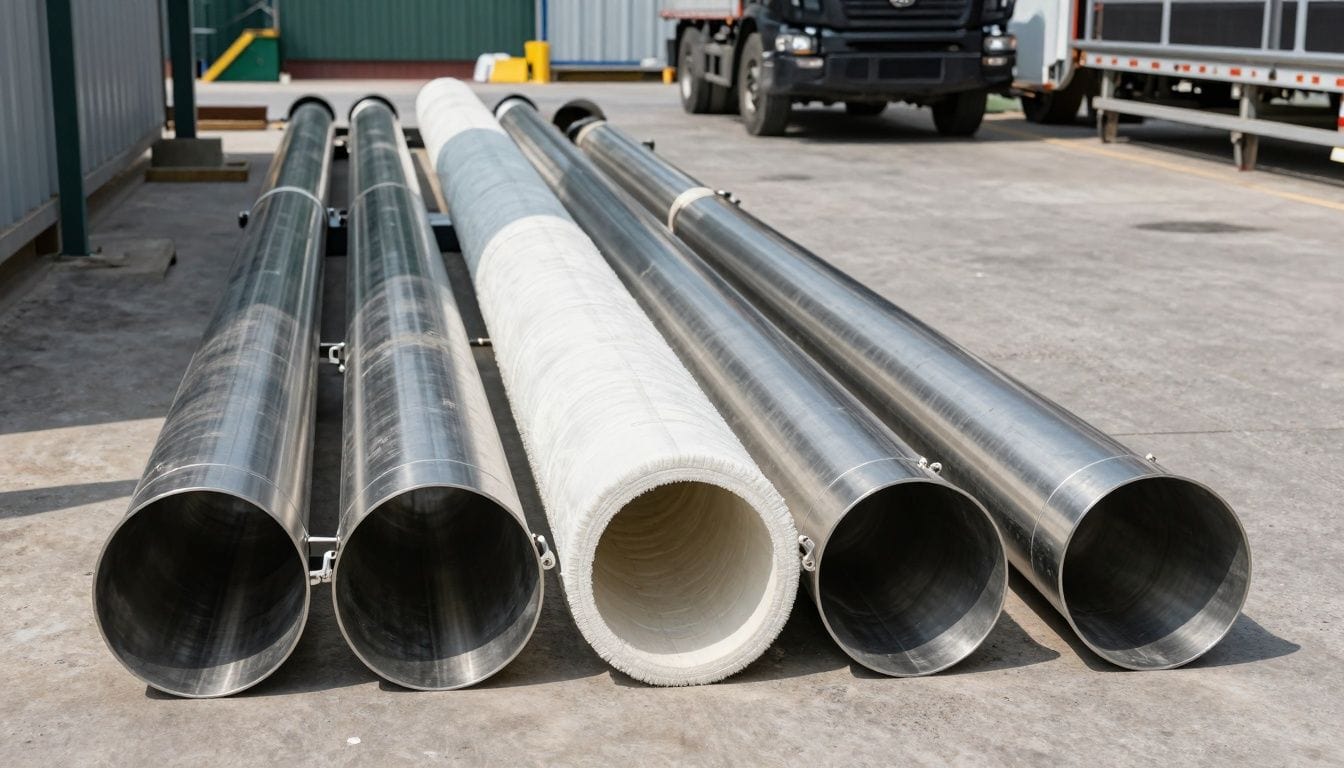
| Weight and handling | Heavier, but allows stable handling on site | Lighter, easy manual handling |
| Installation | Fast, precise installation; rigid, won’t deform | Simple due to lightness but can flex/warp |
| Cutting/processing safety | Clean cuts, minimal dust; safe to weld/fabricate | Cutting releases hazardous dust and fibres |
| Durability and longevity | 30–50 years plus; resists most environments | 10–25 years, UV and wear may degrade faster |
| Corrosion resistance | Excellent, including in saline/marine settings | Good but prone to micro-cracking over time |
| Load capacity and strength | Supports heavy vehicular (Class D-E+) loads | Moderate (Class B–D), may deform under load |
| Cost (initial) | Higher upfront | Lower upfront |
| Cost (whole-of-life) | Lower due to minimal replacement and servicing | Higher due to periodic replacement |
| Maintenance | Easy, infrequent (rinse, inspect, occasional polish) | Requires periodic checks, sensitive to impact |
| Environmental impact | 90%+ recyclable, low-impact local manufacturing | Non-recyclable, produces microplastics |
| Heat and fire resistance | Non-combustible, resists extreme temperatures | Can soften or burn, emits toxic fumes |
| Chemical resistance | Resistant to majority, esp. acids, bases | Good overall, but not all chemicals tolerated |
| Safety (slip, conductivity) | Engineered slip resistance, non-conductive grates | Often lower slip resistance, less engineered |
| Aesthetics and versatility | Superior visual and design flexibility | Limited form and finish options |
Stainless Steel Drainage Channels by Paige Stainless
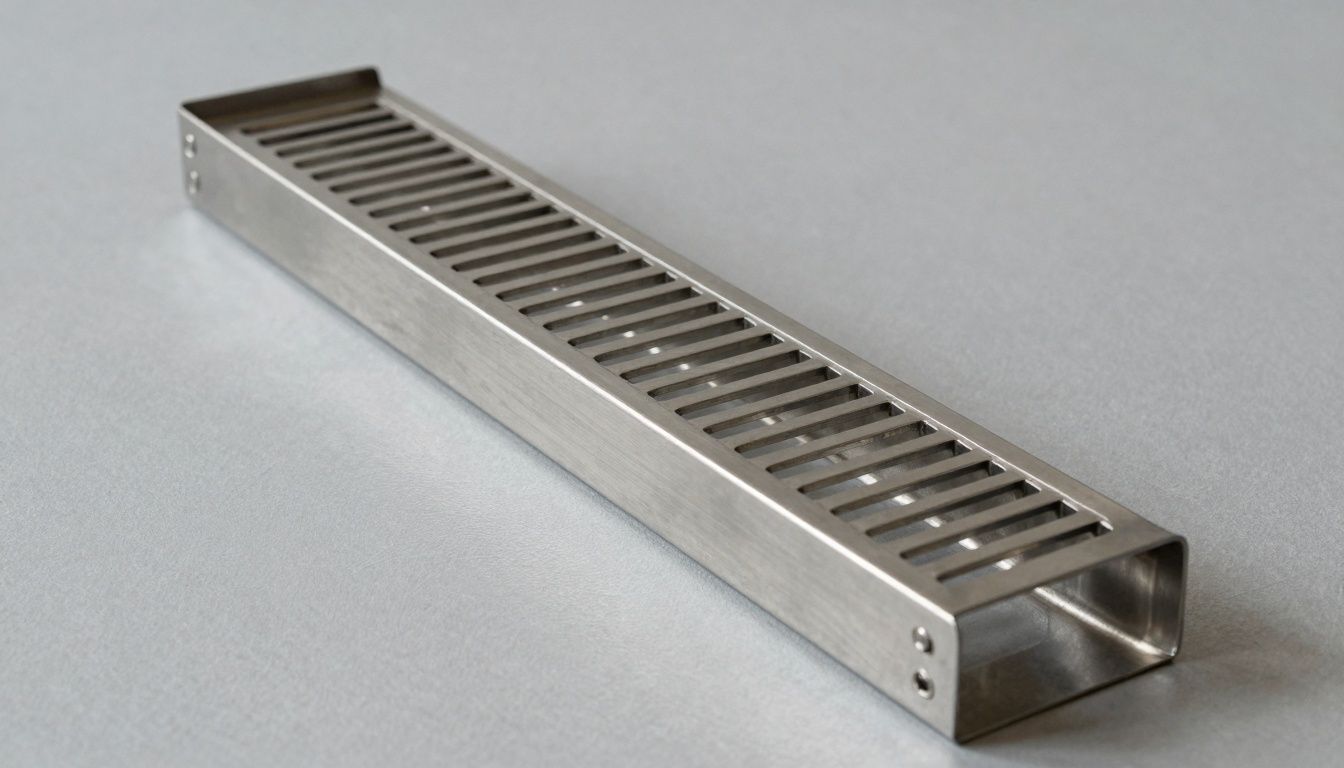
- What they do: Provide robust, precise drainage for all environments, especially public spaces, urban infrastructure and architecture.
- How they work: Water and debris are channelled through custom-fabricated grates, optimised for surface run-off and pedestrian safety.
- Where they’re made: Custom manufactured in Australia at Paige Stainless’ Queensland facility.
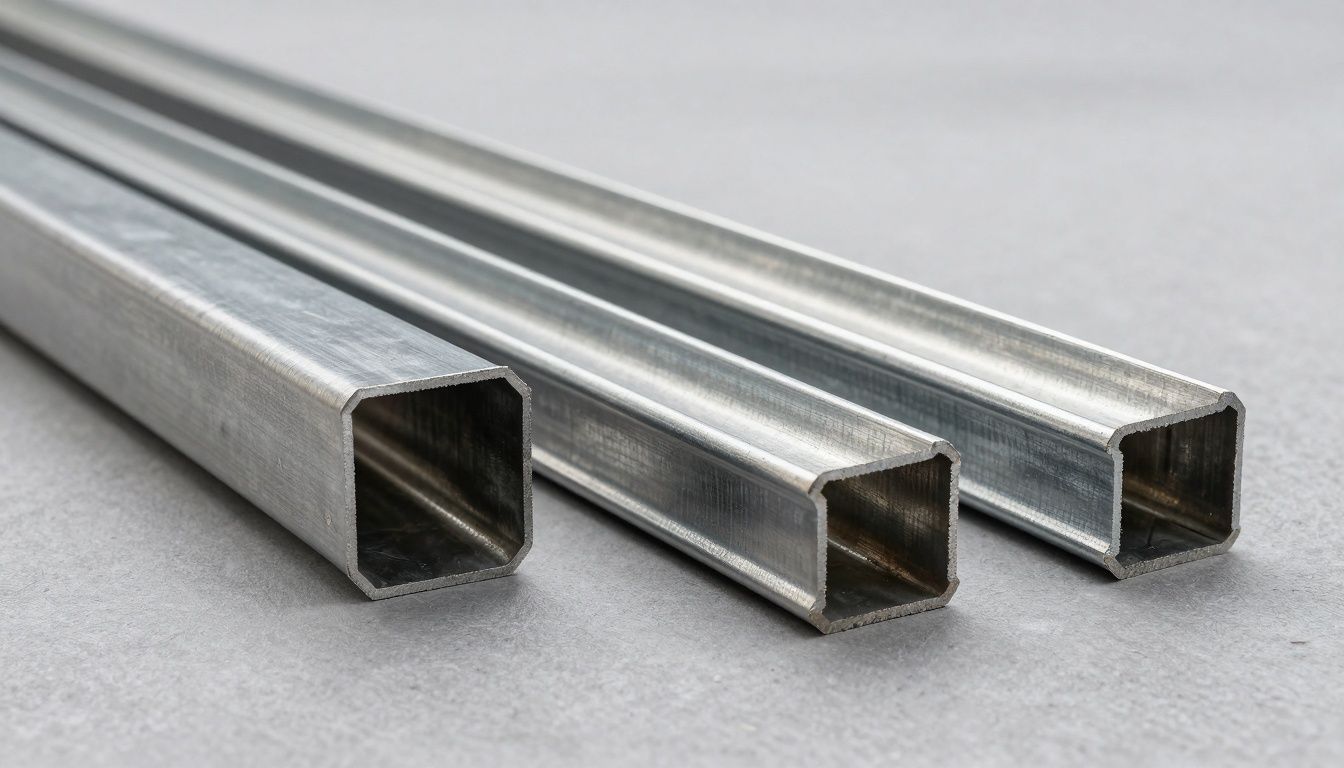
- How they’re made: Fabricated to architectural spec or standard profile from marine-grade stainless steel, using state-of-the-art laser and TIG/MIG welding, with certified QA.
- Environmental impact: Over 90% recyclable, GreenTag certified, locally sourced material for reduced transport emissions.
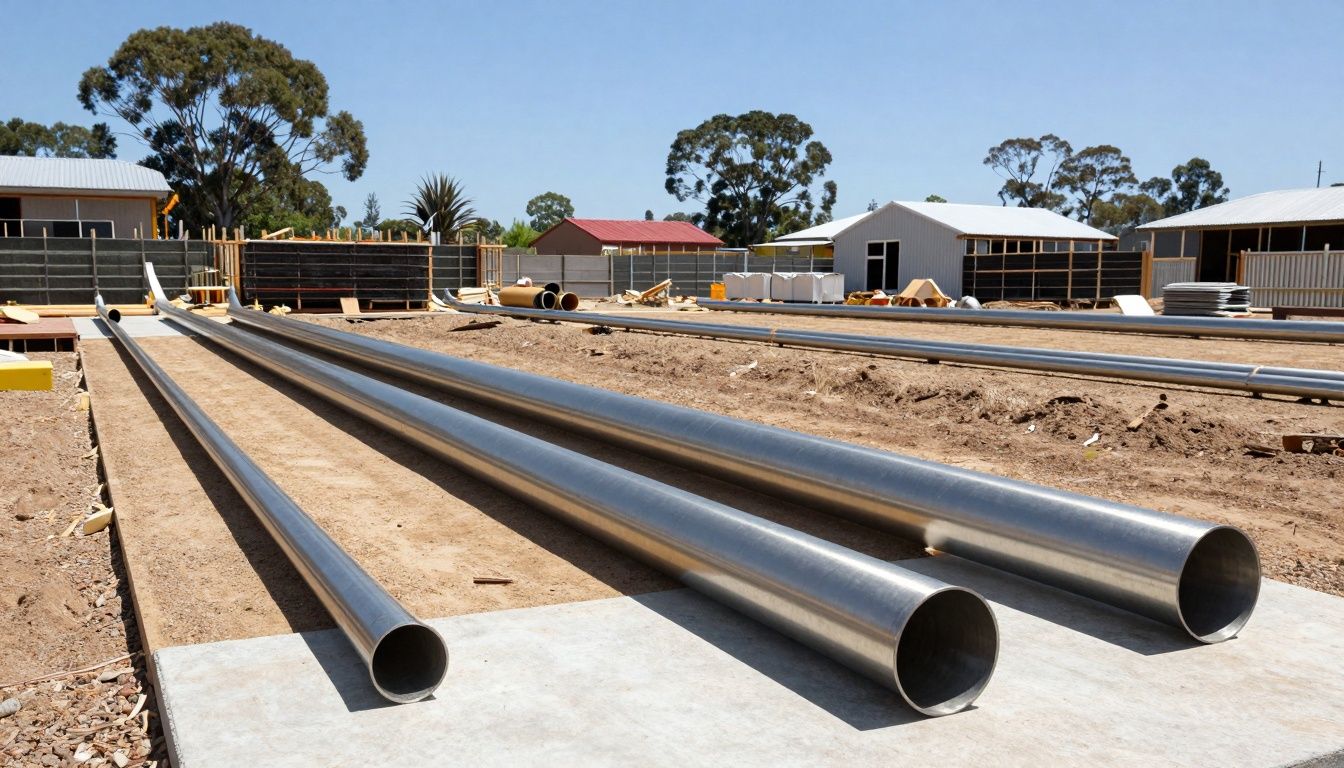
- Installation process: Fast, modular assembly on site, precision-fit for complex layouts and curves, minimal site cutting; compliant with AS 3996.
- Features: Heel guard, slip resistance, lockable grates, custom finishes and profiles, vandal-resistance.
- Performance: High load ratings (Class B–E+), excellent in harsh outdoor/marine settings, 30+ year expected service.
- Lifespan: Typically 30–50 years with proper maintenance.
- Pricing: Higher initial, but lowest total lifecycle cost for medium/large projects.
Glass Reinforced Polyester/Polymer (GRP) Drainage Channels
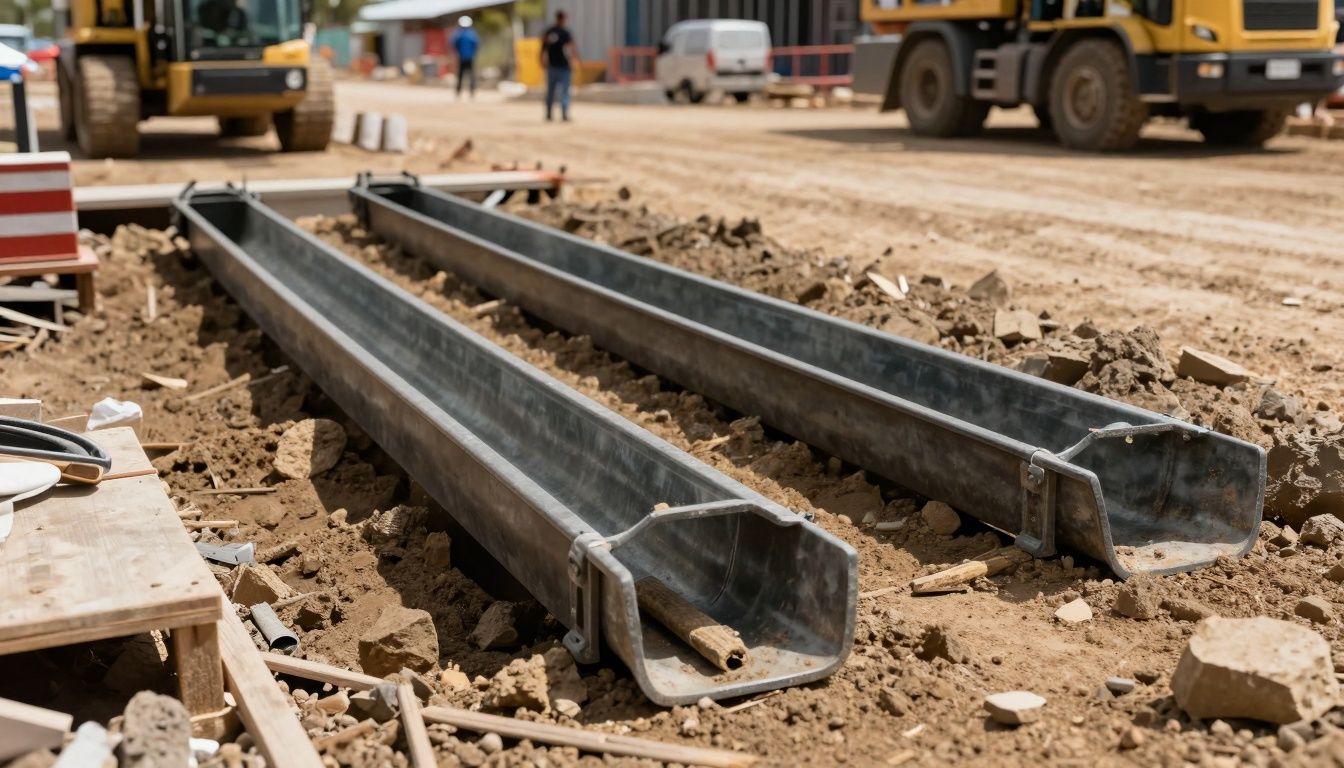
- What they do: Facilitate surface water drainage with lightweight, modular systems.
- How they work: Channels made of GRP sections, sometimes with slip-on polymer or metal grates, collect runoff.
- Where they’re made: Frequently imported or produced overseas; limited Australian manufacture.
- How they’re made: Pultruded or moulded from glass-fibre-reinforced resin; subject to matrix variability.
- Environmental impact: Difficult to recycle, generates microplastics and hazardous dust in manufacture/cutting.
- Installation process: Lightweight allows manual handling and quick placement, but risk of flex/cracking; dust hazards when cutting.
- Features: Modular shapes, limited slip resistance; grates often not integrated or customisable.
- Performance: Sufficient for light traffic; can degrade in UV, harsh weather or under consistent heavy load.
- Lifespan: 10–25 years; susceptible to impact, UV and environmental damage.
- Pricing: Low up-front, but higher replacement and maintenance costs over time.
FAQs: Stainless Steel vs GRP
- Which material is better for most applications? For longevity, public safety, and performance, Australian-made stainless steel from Paige Stainless consistently outperforms GRP in most commercial and civic applications.
- Can stainless steel by Paige Stainless meet Class D or E load ratings under AS 3996? Yes, systems are regularly engineered and tested to exceed Class D (heavy duty traffic) and above, with NATA-accredited test reports available.
- How does slip resistance compare in wet areas? Stainless steel grates from Paige Stainless are certified to AS 4586, with available slip-resistant surface finishes and pedestrian-safe heel guard profiles; GRP typically offers reduced or inconsistent slip resistance.
- What are the maintenance requirements over a 10–20 year lifecycle? Stainless steel requires basic cleaning and annual inspection; GRP may need surface repairs or full replacement in high-traffic or UV-exposed areas.
- Is stainless steel suitable for custom designs like curves and architectural details? Absolutely; Paige Stainless offers full custom fabrication and precision-bent modules for unique patterns, radii, and architectural detailing.
Ready to specify Stainless Steel?
For technical guidance, project pricing or support with custom fabrication (including curved drainage channels and integrated systems), contact the Paige Stainless team to discover the benefits of Australian-made solutions built to outperform and outlast all alternatives.
- Technical data and certifications available on request (AS 3996 load classes, slip resistance to AS 4586, accessibility to AS 1428.2, and sustainability credentials)