

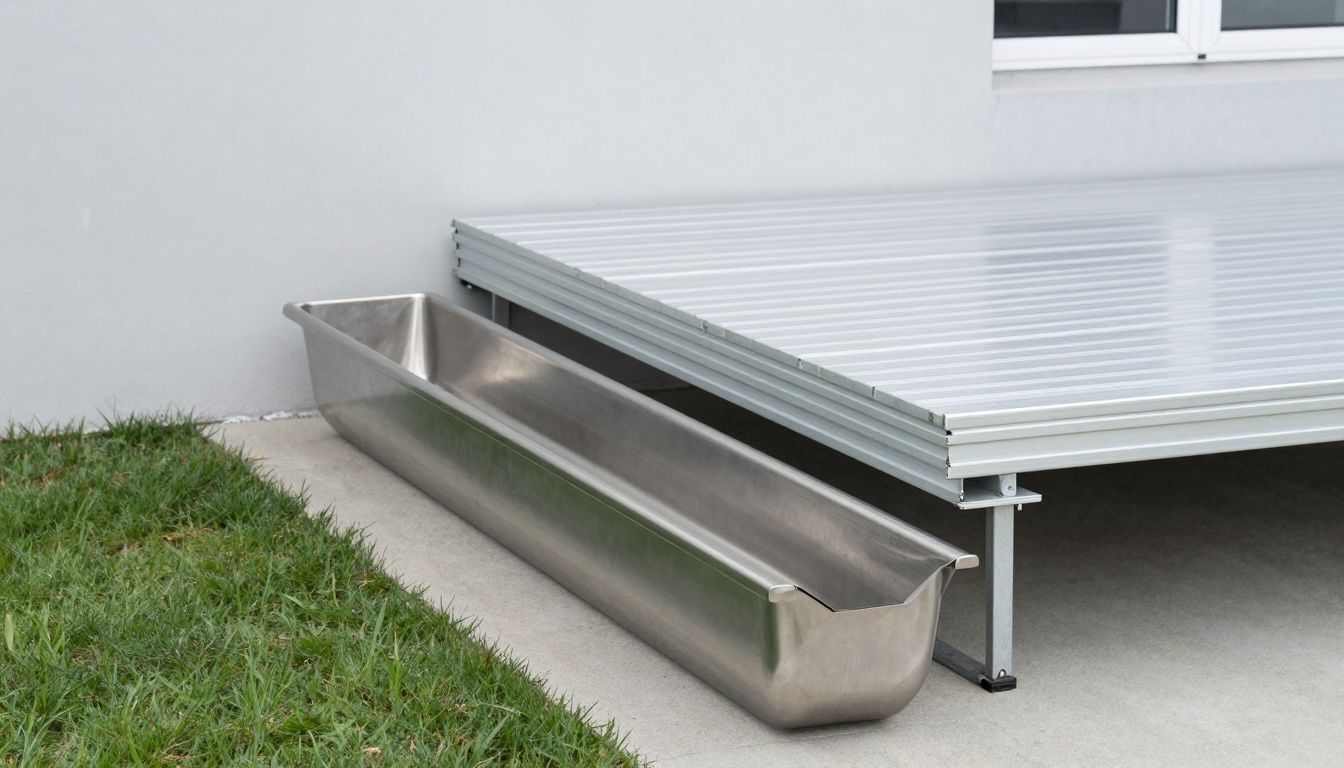
Why choose Stainless Steel by Paige Stainless?
Paige Stainless’ Australian made stainless steel drainage channels deliver unmatched performance, safety, and lifecycle value—backed by excellent corrosion resistance and maintenance savings. With up to 50+ years durability, ultra-low maintenance, and precise customisation, stainless steel outperforms aluminium for whole-of-life cost and reliability.
A growing number of architects, developers and trades across Australia are switching from Aluminium to Stainless Steel by Paige Stainless for their drain channels!
Market leaders are rapidly moving away from aluminium channels as the durability, slip resistance, and custom-fabrication potential of Paige Stainless’ stainless steel solutions are proven on major civic, hospitality, transport and marine projects. From seaside boardwalks to high-rise developments, stainless steel is now the preferred material where reliability and visual appeal matter.
What makes Stainless Steel drainage channels manufactured in Australia by Paige stainless better?
- Australian-made using precision fabrication allows for fast, seamless installation every time.
- Advanced slip-resistant options and heel guard grating ensure pedestrian safety, exceeding industry standards.
- Exceptional strength and structural integrity deliver performance under the heaviest traffic, indoors and out.
- Class-leading corrosion immunity, even in the toughest coastal or chemical-exposed applications.
- Complete design flexibility: curved, angled or modular systems to suit unique projects and architectural visions.
- Minimise environmental impact with recyclability; certified by Greentag for sustainability.
Head-to-head comparison: key factors
| Criteria | Stainless Steel | Aluminium |
|---|---|---|
| Weight and handling | Heavier, offers more stability; still manageable, especially in modular sections | Lightweight, easier to handle on site but can lack rigidity |
| Installation | Custom-fabricated for easy, accurate installation | Lighter but more prone to warping, less stable overall |
| Cutting/processing safety | Safer to cut/process with proper PPE; less sharp than aluminium offcuts | Aluminium shavings can be hazardous; higher risk of cuts |
| Durability and longevity | 50+ years even in harsh environments | Prone to denting, shorter life (10–25 years) |
| Corrosion resistance | Outstanding (marine grade available) | Can corrode in salt or harsh chemicals |
| Load capacity and strength | Superior; engineered for heavy duty loads (Class B–D, AS 3996) | Lower yield strength, not suitable for high loads |
| Cost (initial) | Higher initial investment | Lower upfront but higher replacement frequency |
| Cost (whole-of-life) | Excellent, due to durability and low maintenance | Higher due to early replacement and repairs |
| Maintenance | Minimal—occasional cleaning | Frequent cleaning, risk of corrosion/pitting |
| Environmental impact | Recyclable, low carbon with local manufacture | Also recyclable but higher embodied energy if imported |
| Heat and fire resistance | Exceptional; will not deform | Prone to warping under heat/fire |
| Chemical resistance | High, especially with 316 marine grade | Moderate; reacts with harsh chemicals |
| Safety (slip, conductivity) | Engineered slip-resistant grates, safe profiles | Can be slippery; higher conductivity hazard |
| Aesthetics and versatility | Superior finish, custom shapes, seamless blending | Limited colour/texture, less versatile for design |
Stainless Steel Drainage Channels by Paige Stainless
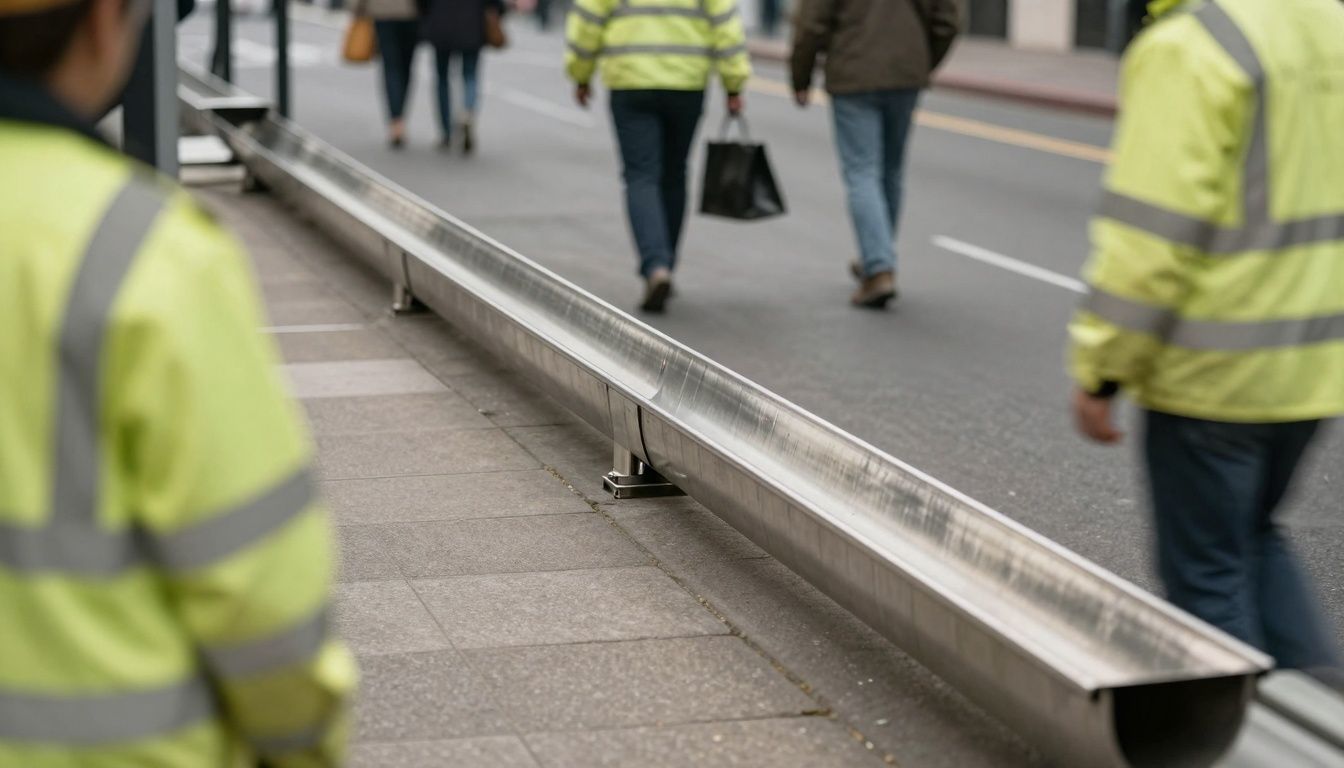
- What they do: Seamlessly channel surface water away from built environments in a safe, precise way.
- How they work: Modular, custom-sized grates and channels direct runoff to stormwater, preventing pooling and slip hazards.
- Where they are made: Manufactured in Australia (Queensland) in-house by Paige Stainless using advanced techniques.
- How they are made: Precision-welded from high-grade stainless, custom designed to project specs—including curves/tapers.
- Environmental impact: GreenTag Certified, locally sourced, high recyclability reduces embodied carbon.
- Installation process: Delivered to site ready-to-install, engineered for fast fit into pre-prepared trenches.
- Features: Custom sizes, heel guard/anti-slip grates, high load bearing, corrosion resistance, aesthetic finishes.
- Performance: Proven 50+ year lifespan; minimal maintenance even in marine, poolside, or public spaces.
- Pricing: Higher at outset, but lowest cost over life cycle due to infrequent repair/replacement and minimal downtime.
Aluminium Drainage Channels
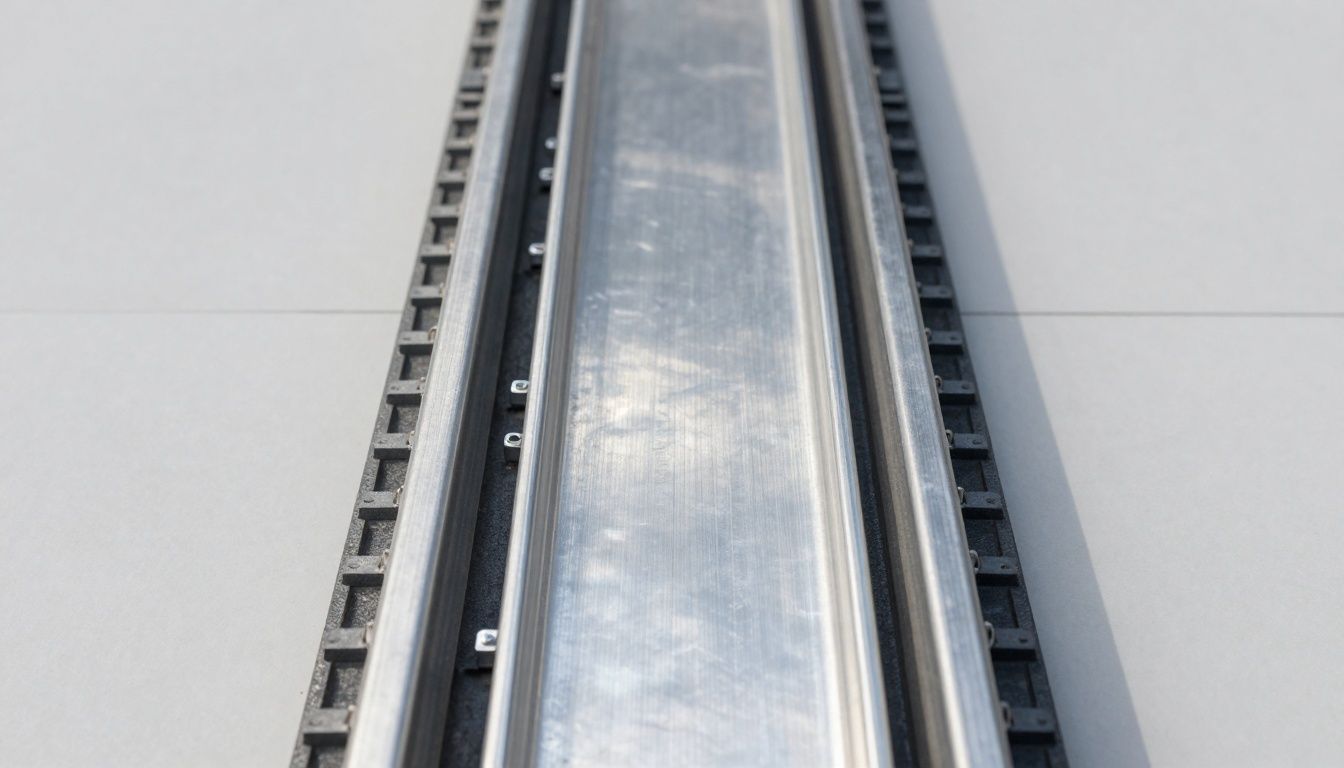
- What they do: Lightweight channels to divert surface water from paved areas.
- How they work: Prefabricated sections connect and drain to stormwater; generally standard lengths/shapes only.
- Where they are made: Typically imported or assembled from extruded profiles—often outside Australia.
- How they are made: Extruded and cut to length; less customisation possible, welded or mechanically joined.
- Environmental impact: Recyclable but typically higher embodied energy, sometimes sourced offshore.
- Installation process: Lighter weight eases manual handling but may require more bracing or adjustment.
- Features: Cheaper initially, lighter weight, faster install for basic projects. Limited load and slip resistance features.
- Performance: Shorter expected lifespan (10–25 years), less suitable for corrosive settings, frequent cleaning/repair.
- Pricing: Lower up front, but accelerated replacement/repair raises total cost of ownership.
FAQs: Stainless Steel vs Aluminium
- Which material is better for most applications? Stainless steel is preferred for demanding or high-traffic areas, where durability, load, and aesthetics matter. Aluminium suits only light, low-traffic or temporary settings.
- Can Stainless Steel by Paige stainless meet Class D load ratings under AS 3996? Yes—Paige Stainless channels are certified and regularly engineered to Class B, C and D loadings, tested per AS 3996 with compliance documentation available.
- How does slip resistance compare in wet areas? Stainless steel grates can achieve maximum P5 slip resistance ratings with heel guard and anti-slip designs; aluminium options are generally less effective in wet, oily or marine exposed locations.
- What are the maintenance requirements over a 10–20 year lifecycle? Stainless steel channels need occasional cleaning (annually or less), while aluminium is prone to corrosion and may require frequent upkeep, cleaning and potential segment replacement.
- Is Stainless Steel suitable for custom design like curves and architectural details? Yes—Paige Stainless excels at custom-fabricating curves, tapers and modular systems with tight tolerances to achieve uninterrupted architectural vision.
Ready to specify Stainless Steel?
For technical guidance, project pricing or custom fabrication support—including unique curved or modular systems—reach out to the Paige Stainless team today and explore how Australian-made, certified drainage systems set the standard for compliance, durability and design.
- Technical data, certifications and custom design support available upon request (AS 3996, AS 4586, AS 1428.2, sustainability ratings)