

What is the best option for your drainage needs? Let’s compare Aluminium vs Polymer Concrete.
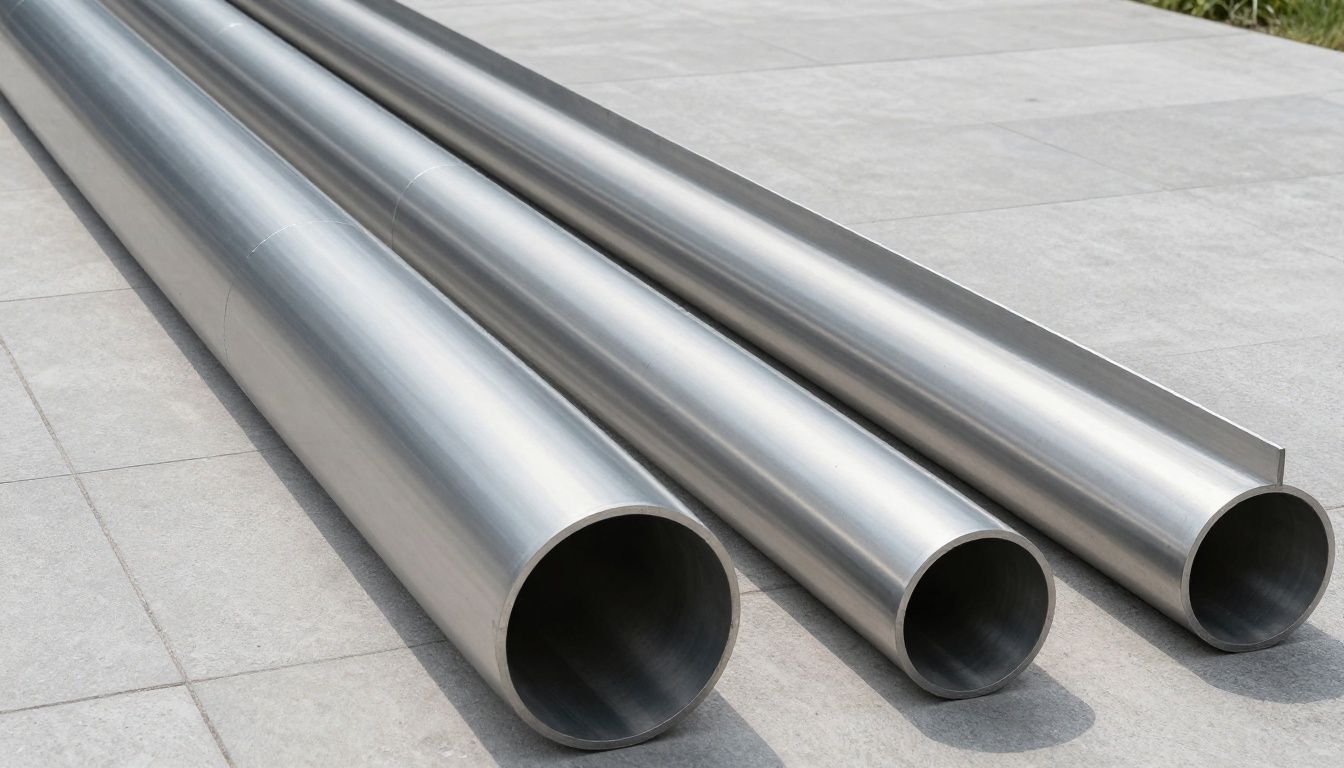
Which is the better drainage material between Aluminium vs Polymer Concrete?
Choosing the right material for your drainage system is critical to the success and longevity of any project. Both aluminium and polymer concrete offer distinct advantages, but they are suited to very different applications. Here’s a detailed breakdown to help you decide.
Aluminium
- What They Do: Aluminium drainage systems are used to collect and channel surface water in pedestrian areas, residential developments, and commercial spaces where a lightweight, aesthetically pleasing solution is required.
- Operation: Water enters the channel through a grate and is directed along the sloped or non-sloped channel to a designated outlet point. Their smooth surface facilitates efficient water flow.
- Origin: Aluminium is sourced globally as bauxite ore. The raw material is then processed and extruded into drainage channel profiles by specialised manufacturers.
- Manufacturing Process: Aluminium is produced by refining bauxite into alumina, then smelting the alumina into pure aluminium through an energy-intensive electrolytic process. The channels are then extruded into their final shape and often anodised for enhanced corrosion resistance and colour.
- Environmental Impact: Aluminium is highly recyclable, and using recycled aluminium requires only 5% of the energy needed for primary production. However, the initial production from bauxite ore has a significant environmental footprint.
- Installation Process: Due to its light weight, aluminium is easy to handle and transport on-site. It can be cut to size with standard power tools, making installation relatively quick and straightforward for a skilled tradesperson.
- Features: Key features include its light weight, modern aesthetic, and good natural corrosion resistance. It can be anodised for different colours and increased surface hardness.
- Performance: Aluminium performs well in low to medium-duty traffic areas. Its flow rates are good, but it is susceptible to denting under heavy impact and can be corroded by harsh chemicals or galvanic action if installed with dissimilar metals.
- Lifespan: A properly installed and maintained anodised aluminium drain can last for many years, but its lifespan can be shortened in harsh environments or under heavy loads.
- Pricing: The initial cost is typically moderate, sitting between plastic and stainless steel. Long-term costs can increase if the system is damaged or corrodes prematurely, requiring replacement.
Polymer Concrete
- What They Do: Polymer concrete channels are heavy-duty drainage systems designed to manage surface water in demanding environments like highways, airports, ports, and industrial facilities where high load capacity and chemical resistance are essential.
- Operation: Like other channel drains, they collect water through a grate and transport it to an outlet. The non-porous material ensures maximum flow efficiency and prevents water absorption into the channel body.
- Origin: The components—polyester resins, aggregates (like sand and gravel), and fillers—are sourced from various suppliers and combined by specialised manufacturers of precast concrete products.
- Manufacturing Process: Aggregates and fillers are mixed with a polymer resin binder. This mixture is then cast in moulds and cured to form an incredibly strong and dense composite material. The process does not require water, unlike traditional cement concrete.
- Environmental Impact: Polymer concrete is not easily recyclable. The production involves chemical resins derived from petroleum. However, its exceptional durability means a very long service life, reducing the need for replacement.
- Installation Process: Installation is more labour-intensive due to the material’s significant weight, often requiring lifting equipment. Channels are supplied in precast sections that are joined on-site. Cutting requires specialised diamond blades and strict health and safety measures due to hazardous silica dust.
- Features: Its defining features are exceptional compressive strength, very low permeability, and superior resistance to a wide range of chemicals, frost, and weathering.
- Performance: It offers outstanding performance under extreme loads (up to Class G in some cases). Its smooth surface provides excellent hydraulic performance and is easy to clean.
- Lifespan: Polymer concrete systems have an extremely long lifespan, often lasting for decades with minimal degradation, even in the most aggressive environments.
- Pricing: The initial material and installation costs are high. However, its long-term value is excellent due to its extreme durability and very low maintenance requirements.
Comparison Table
| Feature | Aluminium | Polymer Concrete |
|---|---|---|
| Weight and Handling | Lightweight, easy to handle. | Very heavy, requires lifting equipment. |
| Installation Ease | Relatively easy and fast. | Labour-intensive and slower. |
| Health and Safety | Cutting produces metal shavings; standard PPE required. | Cutting produces hazardous silica dust; requires strict respiratory protection and wet cutting. |
| Durability | Good, but can dent and scratch. | Excellent; high impact and abrasion resistance. |
| Corrosion Resistance | Good, but vulnerable to certain chemicals and galvanic corrosion. | Excellent; highly resistant to most chemicals and weathering. |
| Load Capacity | Suitable for pedestrian to light vehicle traffic (up to Class C). | Very high; suitable for the heaviest loads, including aircraft (up to Class G). |
| Cost | Moderate initial cost, potential for higher long-term cost. | High initial cost, very low long-term cost. |
| Maintenance | Low; requires regular cleaning. | Very low; non-porous surface is easy to clean. |
| Environmental Impact | Recyclable, but primary production is energy-intensive. | Long lifespan but difficult to recycle; involves chemical resins. |
| Heat and Fire Resistance | Melts at approx. 660°C; not fire-rated for structural use. | Good heat resistance, but resins can be damaged by fire. |
| Chemical Resistance | Susceptible to strong acids and alkalis. | Excellent resistance to a broad spectrum of chemicals. |
| Safety Features | Grates can be made slip-resistant. Material is electrically conductive. | Grates determine safety. Channel is non-conductive. Grates are often stainless steel for slip resistance. |
| Aesthetics | Modern, clean, metallic finish. Can be anodised in various colours. | Utilitarian and industrial. Final look depends on the grate material. |
FAQ: Aluminium vs Polymer Concrete
- Which material is better for a driveway?
For a standard residential driveway, a properly rated aluminium system can suffice. However, for areas with heavy vehicle traffic or exposure to de-icing salts, polymer concrete offers far superior durability and resistance. - Which is more resistant to chemicals in an industrial setting?
Polymer concrete is the clear winner. It is engineered to withstand a wide range of aggressive chemicals, acids, and alkalis found in industrial and processing plants, whereas aluminium would corrode quickly. - Is there a significant cost difference?
Yes. Polymer concrete has a higher upfront cost for both materials and installation. Aluminium is more moderately priced initially, but its lower durability in demanding applications can lead to higher lifetime costs. - Which is easier to install for a DIY project?
Aluminium is significantly lighter and easier to handle and cut, making it more manageable for a competent DIYer. Polymer concrete’s weight and specialised cutting requirements mean it should be handled by professional contractors.
While both aluminium and polymer concrete serve specific purposes, when your project demands the highest standard of durability, hygiene, corrosion resistance, and architectural finish, stainless steel is the unparalleled choice. At Paige Stainless, we custom-fabricate world-class stainless steel drainage solutions that deliver exceptional performance and longevity. Contact our expert team to see how we can provide the perfect drainage system for your project.